The Asset Library Strategy: 100+ Platform-Ready Deliverables from a Single Production Day
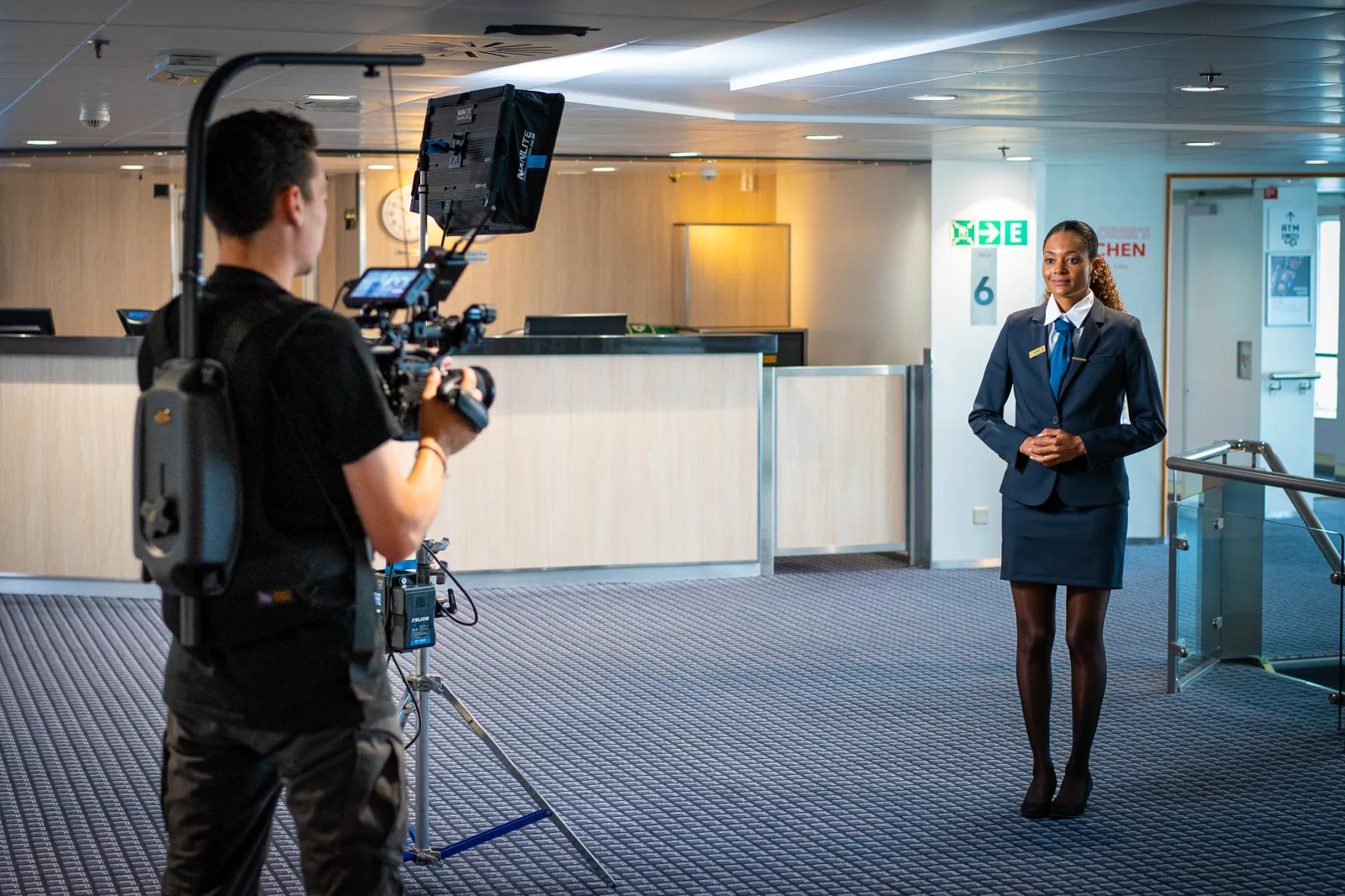
The traditional financial model of commercial video production is fundamentally broken. Historically, brands approached content through a linear lens: identify a single campaign goal, write one script, book a crew, and spend a significant portion of the quarterly budget to output a lone 60-second master film and two minor cutdowns.
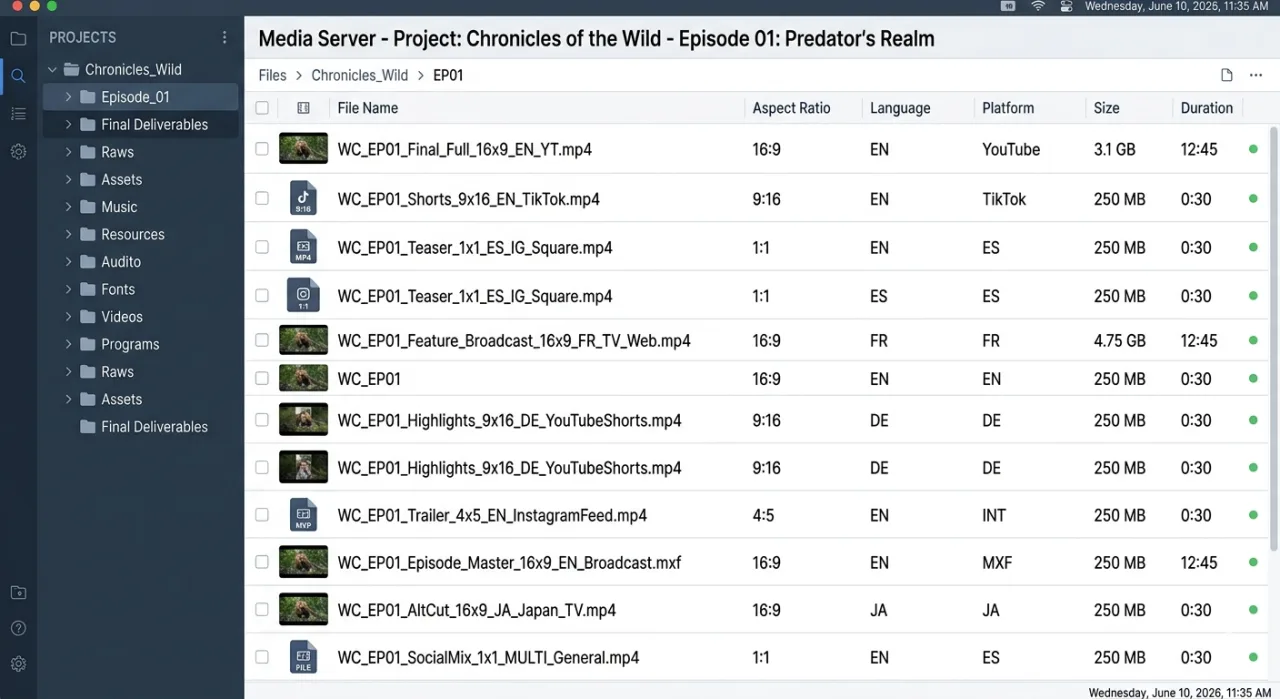
In today's multi-channel ecosystem, that's a recipe for rapid content depletion. Audiences across LinkedIn, YouTube, Meta, and TikTok consume content at an unprecedented rate. If your framework only yields a handful of assets, your media buyers hit ad fatigue within weeks and your organic channels fall silent. To survive the attention economy, forward-thinking brands are shifting from a "campaign output" mindset to an asset library strategy: treating a single production day as a high-yield content engine that extracts 100+ platform-ready deliverables from one shoot.
What is the asset library strategy?
It's an architectural approach to content where a production footprint is designed from the ground up to capture modular, isolated visual and auditory components rather than a single linear narrative. Instead of shooting "Scene 1, Take 1" of a fixed script, the director and crew operate against a content multiplication matrix. Every setup, lighting change, and interview segment is mapped to serve multiple channels, formats, and intent stages simultaneously.
Content multiplication means intentionally separating the visual elements (B-roll, kinetic actions, transitions) from the narrative elements (voiceovers, interview soundbites, text overlays) on set, so they can be endlessly mixed, matched, and repurposed in post.
The anatomy of a 100+ asset production blueprint
Achieving triple-digit deliverables from a single 10-hour production day requires flawless pre-production engineering. A strategic agency divides the day into modular capture blocks, mapping outputs across a multi-platform distribution grid:
| Capture block | Raw material harvested | Asset count |
|---|---|---|
| Executive / expert interview | 45 minutes of structured, prompt-driven multi-cam dialogue. | 30 assets |
| B-roll & kinetic textures | 4 hours of high-frame-rate atmospheric capture. | 50 assets |
| Product / service focus | 3 hours of macro-detail capture, UI interaction, onboarding. | 10 assets |
| Behind-the-scenes & culture | Secondary camera running ambient documentary capture all day. | 15 assets |
| Grand total | 10 hours of coordinated capture | 105 assets |
The three core pillars of content multiplication
1. The multi-aspect-ratio protection grid
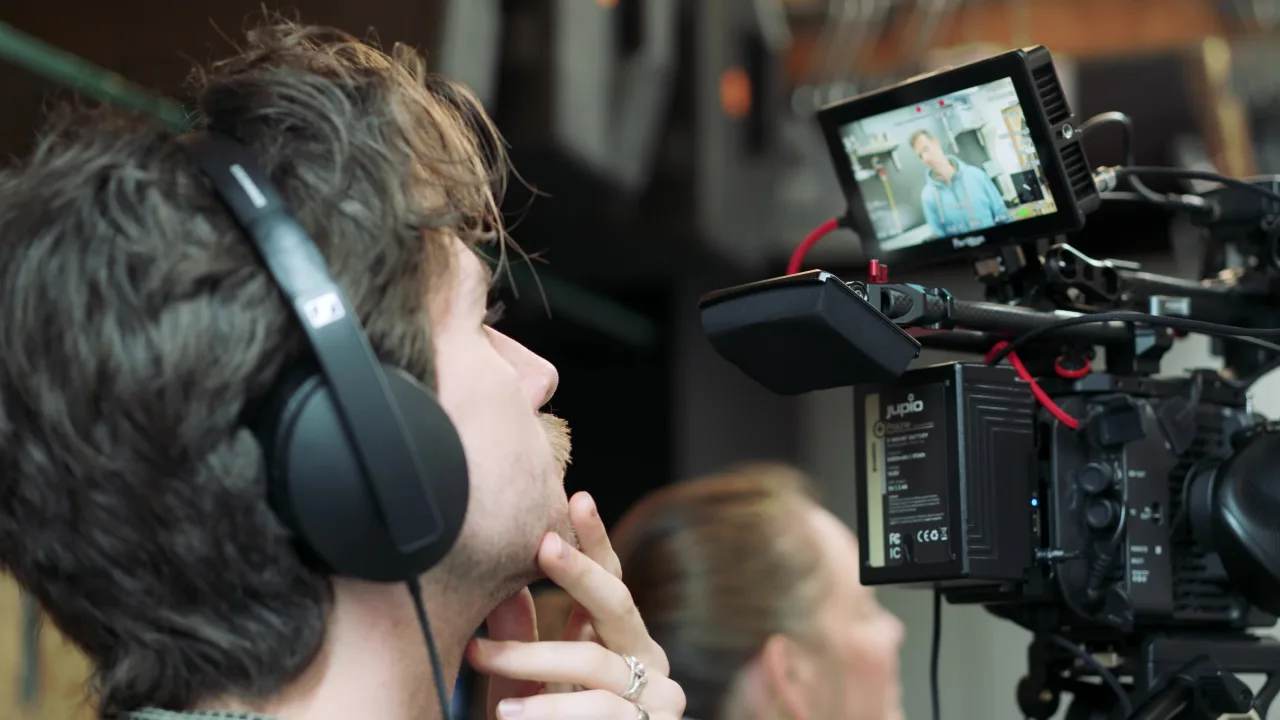
Cameras capture maximum sensor data (open-gate). On-set monitors carry electronic framelines for both 16:9 and 9:16 safe zones simultaneously, so every frame can be sliced into a cinematic website banner or an immersive mobile reel without losing resolution or context.
2. The modular scripting framework
Traditional scripts are interconnected lines of logic; cut ten seconds and the rest loses meaning. The asset library strategy relies on modular scripting: self-contained, atomic blocks of 15 to 30 seconds, each introducing a problem, delivering an insight, and closing with a clean hook. Editors can stack, shuffle, and re-order them into entirely different narrative pathways for diverse audiences.
3. Audio-separated kinetic captures
A portion of the day is dedicated to clean, purely visual actions paired with isolated high-fidelity sound design. By archiving silent slow-motion loops alongside foley (a keyboard click, an engine rush, a workspace hum), your social team can pull a clip months later, add a trending audio track or fresh hook, and deploy a new high-performing asset in minutes.
Amortising your media investment
From a procurement perspective, this completely changes the ROI calculus. If a traditional shoot costs €20,000 and yields two videos, your cost-per-asset sits at €10,000. With a library-first workflow, that exact same €20,000 production footprint outputs over 100 targeted deliverables, and your cost-per-asset plummets to under €200. That efficiency lets media teams test variations aggressively, swap out underperforming creative without a re-shoot, and maintain a constant premium presence across every digital touchpoint.
Frequently asked questions
What is the asset library strategy?
An approach where a production day is designed from the outset to capture modular, isolated components rather than one linear film. Visual elements and narrative elements are recorded separately so they can be recombined afterwards, which turns a single shoot into a library rather than a single finished deliverable.
How does one production day produce more than 100 deliverables?
Through pre-production engineering rather than longer hours. The day is divided into modular capture blocks mapped against a multi-platform output plan, cameras record open-gate with dual framelines, and scripting is broken into self-contained blocks of 15 to 30 seconds that each stand alone.
What is modular scripting?
Writing in atomic blocks rather than one continuous argument. A traditional script is interconnected, so cutting ten seconds leaves the rest without meaning. Modular scripting produces self-contained segments of 15 to 30 seconds, each complete on its own, which can be reordered and reused across different platforms.
Does this approach reduce cost per asset?
Substantially, because the fixed costs of a production day, including crew, equipment, location and travel, are amortised across many more finished deliverables. The main cost driver shifts from additional shoot days to planning time, which is considerably cheaper and easier to schedule.
Stop spending your entire budget on standalone videos that fatigue within weeks. Let's co-author a high-yielding content multiplication blueprint for your entire digital footprint.
Get in touchLast updated: